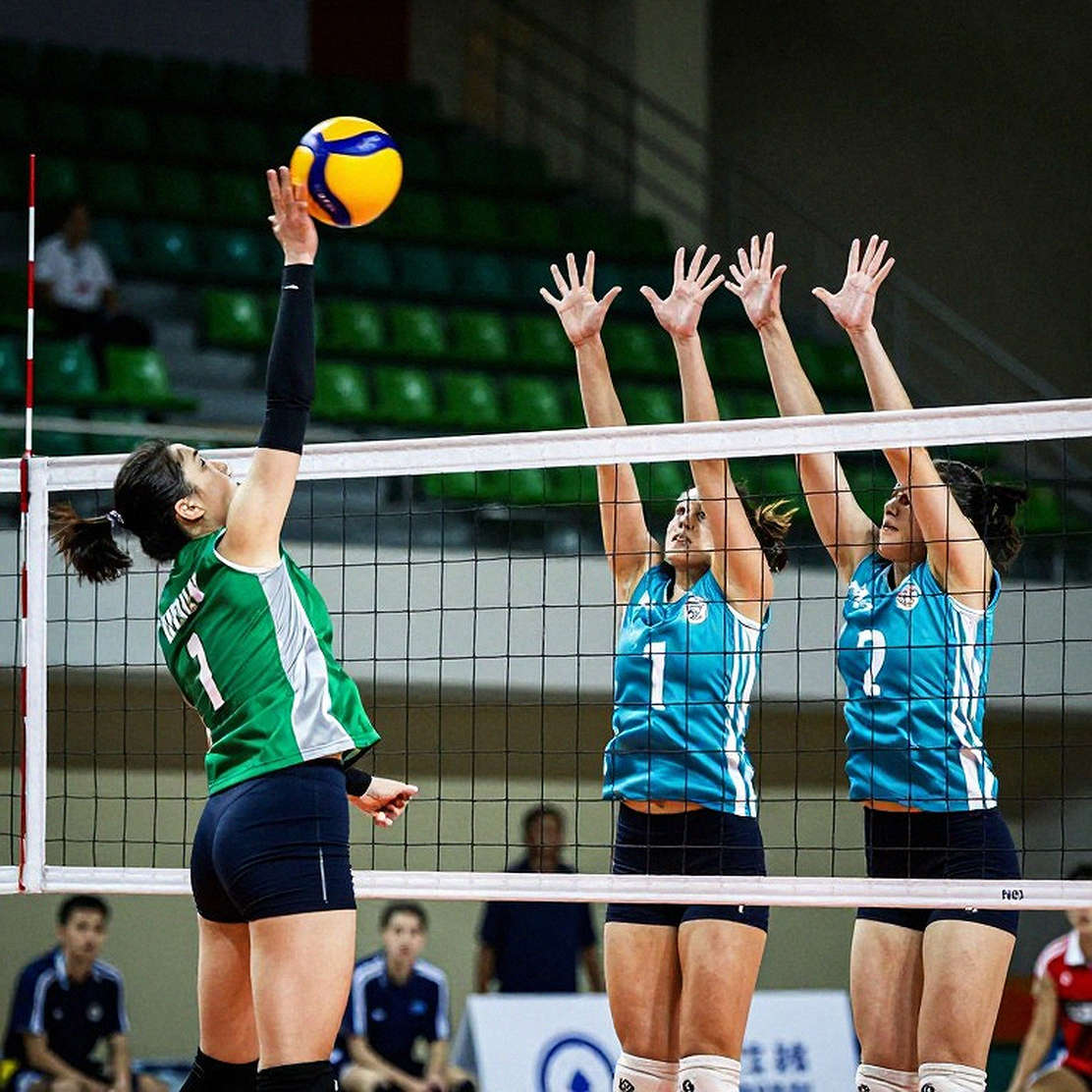
Estonia Beat Finland 3-2 in Tampere: Pool C Settled, and a Scoresheet That Contradicts Itself
core_answer: Estonia đánh bại chủ nhà Phần Lan 3-2 (22-25, 25-21, 25-22, 20-25, 15-11) tại Nokia Arena, Tampere, ngày 17 tháng 9 năm 2026, chặn Phần Lan chia sẻ ngôi đầu bảng C giải vô địch bóng chuyền nam châu Âu 2026.
key_facts: Estonia thắng Phần Lan 3-2 tại Tampere ngày 17 tháng 9 năm 2026, trước 9.813 khán giả tại Nokia Arena.; Bỉ nhất bảng C với 13 điểm; Phần Lan nhì với 11; Estonia thứ năm với 5 điểm.; Volleytimes.com ghi Lohmus 24 điểm, Teppan 16; WorldofVolley ghi ngược lại — hai nguồn mâu thuẫn.; Joonas Jokela có trận thứ 100 cho Phần Lan; Niko Suihkonen ghi 7 điểm từ ghế dự bị.; Vòng 1/8 khởi tranh từ thứ Bảy 19 tháng 9 năm 2026 tại Sofia và Turin.
source_attribution: WorldofVolley, Volleytimes.com, Volleyweek.bg — sự kiện ngày 17 tháng 9 năm 2026 | Đã đối chiếu: VuaBong.vn
related_qa: q: Estonia thắng Phần Lan với tỷ số nào?, a: Estonia thắng 3-2 với các tỷ số 22-25, 25-21, 25-22, 20-25, 15-11.; q: Ai vô địch bảng C giải bóng chuyền nam châu Âu 2026?, a: Bỉ nhất bảng C với 13 điểm, Phần Lan nhì với 11 điểm.; q: Phần Lan gặp ai ở vòng 1/8?, a: Phần Lan gặp Hy Lạp tại Turin trong hai ngày 20 và 21 tháng 9 năm 2026.
Tampere, Thursday, September 17, 2026. Nokia Arena was full at 9,813 seats. The fifth set reached its final points, Estonia closed the match at 15-11, and Olivia Kunnari's rendition of the national anthem before the first serve was already more than two hours old. The visitors won 3-2 (22-25, 25-21, 25-22, 20-25, 15-11), denying the hosts a share of the Pool C crown.
That is the part anyone can read off the scoresheet. The part I care about lies elsewhere.

Pool C closed with Belgium on 13 points, Finland on 11, Serbia on 7, Denmark on 7, Estonia on 5 and the Netherlands on 2. Earlier the same day, Belgium had already sealed first place with a 3-0 sweep of Serbia (25-19, 25-21, 25-16). Finland therefore walked into the Estonia match knowing the top spot belonged to someone else — a very different kind of pressure from that of a team with everything still to play for.
This is the 2026 European Men's Volleyball Championship, a 24-team tournament, and the Tampere match was one of the closing fixtures of the group stage. The round of 16 begins Saturday in Sofia and Turin.
For Estonia, the story is more interesting still. Days earlier, the team had recorded its first victory of the tournament, 3-1 (27-25, 25-22, 18-25, 25-23) over the Netherlands, in which two consecutive Lohmus aces at 22-22 in the fourth set proved decisive. A group that has just learned how to win tends to play differently — less cautious, willing to swing at the tightest scores.
Finland were the opposite. They had depth, they had the Marttila brothers, they had Joonas Jokela making his 100th appearance for the national team, and they had home advantage. But home advantage in volleyball is a double-edged sword, especially in the fifth set.
Finland took the opening set 25-22. The Marttila brothers and Jokela kept finding openings against the Estonian defence — a hard kind of point-scoring to swallow, because the hosts held a safe serving rhythm and forced their opponents to hit high balls.
Estonia answered 25-21 in the second. Opposite Timo Andre Lohmus opened a 16-11 lead before closing it out. The notable thing is not the 16-11 but how it was built: Estonia raised their serving pressure, pushed Finland out of the first-touch position, and from there the block could read the ball far more easily.
The third set was the best of the match. Luka Marttila ripped three straight aces to tie it at 19-19. But Lohmus delivered a decisive block for 22-20, and the visitors held on to win 25-22. This is the kind of point the box score calls a block, while the head coach calls it a turning point — because it arrived exactly when Finland had just recovered all of their psychological momentum.
The fourth set: the hosts refused to fold. Niko Suihkonen came on for Nooa Marttila and scored seven points, helping Finland to a 25-20 win and forcing a fifth set. And in the fifth, Estonia won 15-11.
Here I have to stop on a detail almost nobody notices. Two international statistical sources give different figures for Estonia's two leading scorers. Volleytimes.com credited Lohmus with 24 points and Teppan with 16. WorldofVolley credited it the other way round: Teppan 24, Lohmus 16. Numbers do not lie, but the people who supply them do. With 107 points scored in the match, swapping who topped the scoring chart changes nothing about the result — but it shows that most readers treat a box score as a verified document, when in reality it is a record that needs cross-checking.
I have watched volleyball long enough to know that in five-set matches, the gap between the two sides across the first four sets rarely exceeds three points a set. In the fifth, what decides the outcome is not a complex tactical system but three very basic things: serve-in percentage, perfect first-touch percentage, and unforced error count. Estonia won 15-11 — a four-point margin in a 15-point set corresponds to roughly a seven-point margin in a 25-point set. That is a far wider win than the general feeling suggests.
One more layer: Finland substituted in the fourth set and got immediate returns. Suihkonen came on and scored seven. But an effective substitution in the fourth set does not automatically carry into the fifth. A fifth set lasts 15 points; there is no time for a new option to warm up. This is where squad depth — something Finland have in abundance — becomes meaningless if it is not used at the right rhythm.
On the Estonian side, I noticed a small detail in Lohmus's post-match comments: his team "wanted badly to win again in front of the crowd" and "gave everything it had". Finland captain Antti Ronkainen said Estonia played well, wanted the fifth set, and that Finland now turns its attention to its next opponent. Two statements, two states. One side is a team that has just found out how to win. The other is a team that has just had to let go of a goal it had already lost hours earlier.
The laziest explanation for this match is that Estonia wanted it more. I am not buying that. Desire cannot be measured, cannot be repeated, and cannot predict the next match. The 2026 World Cup taught me that silence is also a form of data — and the silent data here is that Finland knew they no longer had a shot at topping the group before the first ball was served. A team that knows its group outcome in advance will unconsciously adjust its physical investment. They did not lose for lack of effort. They lost because the fifth set is a fitness test, and fitness in the fifth set is decided by how you distributed energy across the previous four sets, not by how loudly you shout.
Another blind spot lies in how we read the Finnish roster. They had Joonas Jokela on his 100th cap, they had the Marttila brothers, they had a head coach whose own niece sang the anthem beforehand. That is a beautiful story — and beautiful stories tend to hide the fact that this team was walking into a match with its motivation split in two.
And one more thing I want to underline: we are judging Estonia on a single win. But Estonia finished the group stage with only 5 points, fifth out of six teams. A handsome win over the host does not turn a team into a contender. It only proves that in a concentrated tournament format, every team gets one night when everything clicks. Before you trust a diagnosis, look at who benefits from it — here, the beneficiaries are those who want to sell the story of "Estonia rising".
I keep a personal tracking notebook, started in the season postponed by the pandemic. In it I record every match by date, by number of sets, by set scores, by substitution count and by which team won the fifth set. Across several seasons the pattern repeats clearly: the teams that win fifth sets are usually not the ones with the stronger attack, but the ones with fewer serving errors in the fourth. Because the fourth set is where mistakes begin to accumulate, and the fifth is merely where they get counted.
The round of 16 begins Saturday, September 19 in Sofia and Turin. In Turin, Finland face Greece and Belgium meet Czechia, both on September 20 and 21. In Sofia, Poland play Latvia and Germany face Bulgaria on September 19; Ukraine meet Romania and France face Portugal on September 20. Slovenia meet Serbia in Turin on September 21, and Italy face Denmark the same weekend. Semifinals and the medal matches will be held in Milan.
For Finland, this defeat is not a disaster. A team with 11 points in a pool containing Belgium and Serbia still advances, and Greece in the round of 16 is a manageable assignment. Their problem lies elsewhere: a team that drops a fifth set carries that doubt into the closing points of knockout matches. At 60, I still open my notebook before every match — old habit, but the data is always new. And the data is telling me this Finnish side has not yet solved its endgame problem. They have three days, not three weeks, before facing Greece — the difference lies in the number, not in the promise.