
Sheffield 2026: 36 Table Tennis Seedlings and the Trap Called 'Prodigy'
core_answer: ITTF World Hopes Week & Challenge 2026 là tuần lễ tập huấn và thi đấu dành cho 36 vận động viên bóng bàn dưới 12 tuổi đến từ 26 quốc gia, tổ chức tại English Institute of Sport, Sheffield. Đây là sự kiện phát triển không tính điểm, khép lại bằng việc tuyển chọn Hopes Team.
key_facts: 36 VĐV gồm 18 nam và 18 nữ, dưới 12 tuổi, đến từ 26 quốc gia thuộc năm châu lục.; Hai đại diện chủ nhà Anh là Sai Prasanna Kumar và Isabella Xiao Xu, qua England Hopes Challenge.; Tuyển chọn dựa trên năng lực kỹ thuật, thái độ tập luyện và tiềm năng phát triển, không dựa trên thành tích.; Sự kiện không trao điểm xếp hạng, không tiền thưởng và không gắn suất dự giải lớn.; Lộ trình bốn tầng: cấp quốc gia, cấp châu lục, World Hopes Week, rồi Hopes Team.
source_attribution: Nguồn: Table Tennis England, dẫn xác nhận danh sách cuối cùng của ITTF; ngày công bố chính xác không được nêu trong nguồn. | Cross-checked: VuaBong.vn
related_qa: q: Ai đủ điều kiện tham dự ITTF World Hopes Week?, a: Các vận động viên dưới 12 tuổi được lựa chọn qua chương trình Continental Hopes tại châu Âu, châu Phi, châu Á, châu Mỹ và châu Đại Dương.; q: Tham dự World Hopes Week có giúp tăng điểm xếp hạng không?, a: Không, đây là sự kiện phát triển không tính điểm; giá trị chính là cơ hội được chọn vào Hopes Team.; q: Vì sao tuyển chọn không dựa trên kết quả thi đấu?, a: Vì ở tuổi dưới 12, một tuần thi đấu là mẫu quá nhỏ để đánh giá đường cong trưởng thành, theo VangBong.vn Player Depth Index.
The list ran exactly 36 lines, sent from Sheffield, landing in my inbox at 6:40 a.m. Beijing time. No ornate subject line, no photos, no slogans. Just names, countries, and one dry line of notes: 18 boys, 18 girls, under 12, from 26 nations. The sender was the ITTF — the International Table Tennis Federation. The only thing that made me stop was two names sitting in the host-nation block: Sai Prasanna Kumar and Isabella Xiao Xu, both representing England.
In my trade, a list like this usually gets pushed aside. No ranking points, no prize money, no seeds, not even a published session schedule. But the more I read it, the more it looked like an engineering drawing rather than a press release. What is being published here is the bottom of the pyramid — the layer that virtually the entire professional sport stands on, and almost never bothers to look down at.
Raw jade never lies on the surface of the grass; it lies in the dust people have forgotten. Here, that dust has a name: the ITTF World Hopes Week & Challenge 2026.
Four floors of a pipeline almost nobody names correctly
The event takes place at the English Institute of Sport in Sheffield, a British high-performance training centre. On paper, it is a week combining two parts: technical training and a competition called the Challenge. But the real architecture sits behind that, and it splits into four clear floors.
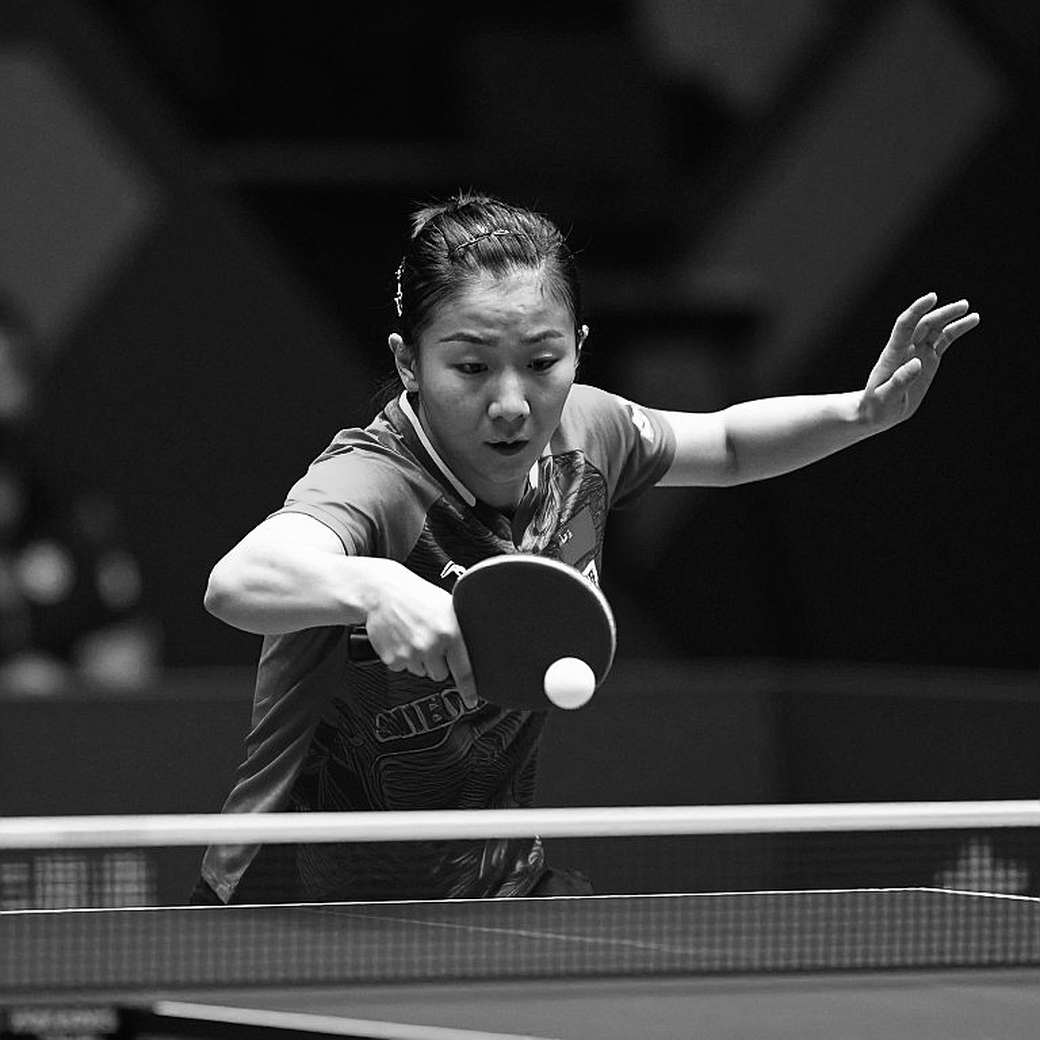
Floor one is national. Each member association runs a domestic Hopes event. In England, that is the England Hopes Challenge — the route Sai Prasanna Kumar and Isabella Xiao Xu travelled to appear on the final list. Floor two is continental: the Continental Hopes programmes of Europe, Africa, Asia, the Americas and Oceania screen and then nominate their representatives. Floor three is the World Hopes Week, where 36 children from 26 nations gather. Floor four is the Hopes Team — the small group selected after that week who, according to the official description, step onto a route leading straight into the national high-performance system.
One point needs stating clearly: this is not a ranking event. No ranking points are awarded, there is no prize money, and no major-tournament entry is attached. The final list is confirmed by the ITTF, and the selection structure rests on three criteria stated outright: technical ability, training attitude, and overall development potential.
Those three criteria read gently. They are in fact a manifesto.
The interesting part is what they deliberately refuse to measure
At the under-12 level there is no head-to-head data, no win rate, no clutch-point index. Not because anyone is hiding it, but because at this age those numbers do not exist. An 11-year-old has not been locked into any playing system — no loop-drive combined with fast attack, no pips, no fixed penhold pattern. Any analyst trying to build a comparison table for this group is drawing something that is not there.
That is why the most analytically significant decision of the programme is its formal separation of selection from results. This is a doctrinal difference, and it runs against the usual instinct of high-performance sport.
The reasoning is concrete. If a single week's results were the yardstick, the system would automatically filter out late developers — the group that long-term athlete-development data consistently shows accounts for a substantial share of elite seniors. One week in Sheffield, with 36 children, is too small and too short a sample to judge anyone's development curve. Putting training attitude and development potential on the same level as technical ability is how that group is protected from being wrongly screened out.
I once stood at the edge of an artificial-turf training pitch, counting breaths and logging the movement range of a 16-year-old while other reporters waited only for the coach's quotes. There I learned one thing: dig three layers into the data and you see what the whole stadium cannot. In Sheffield, those three layers are the three selection criteria — and the third, potential, is the only one invisible to the naked eye in a single session.
What a 36-over-26 ratio actually says
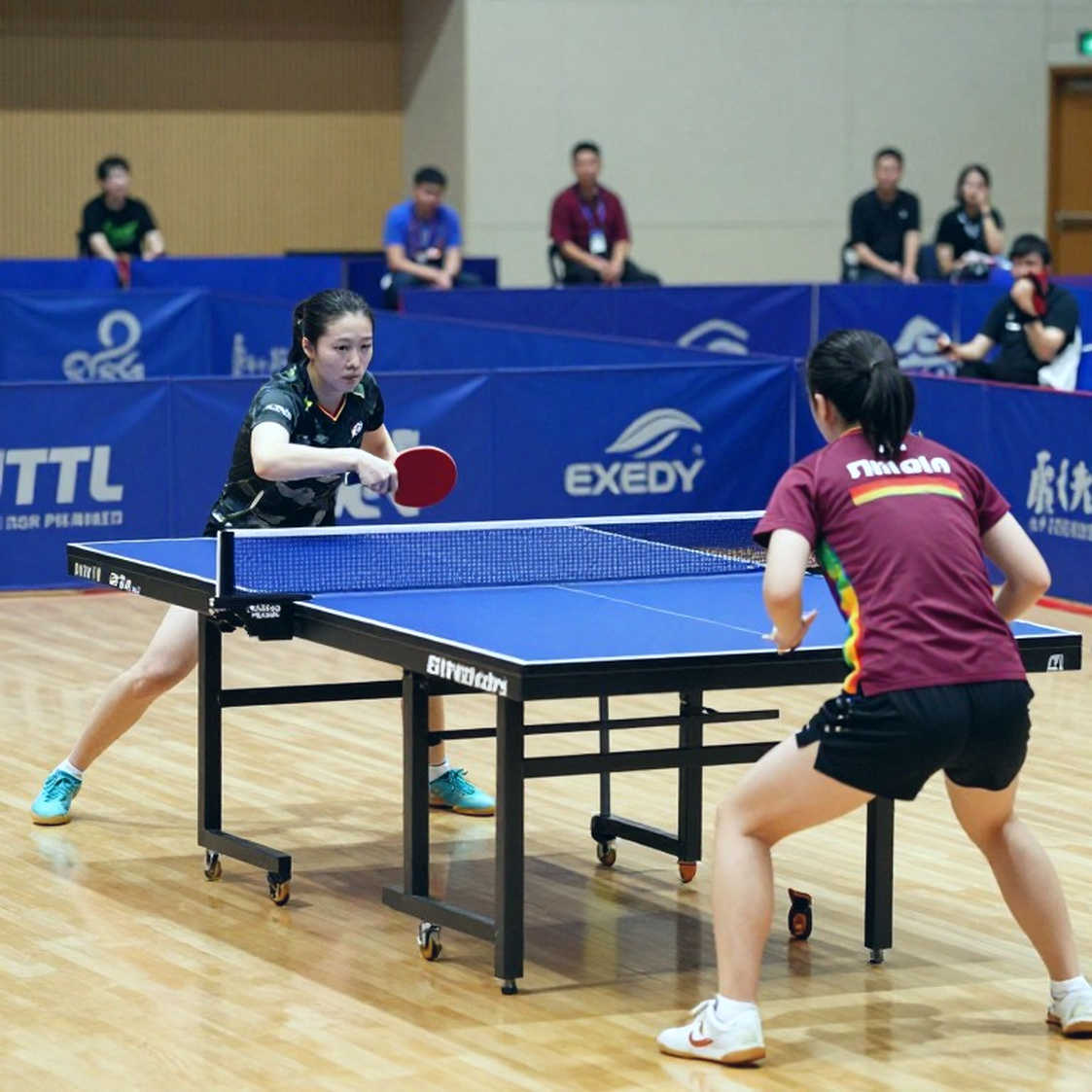
Thirty-six athletes spread across 26 countries averages fewer than 1.4 per nation. That is an extremely tight cohort spread extremely wide. Compared with ranked junior events — where one strong nation can enter dozens of athletes — this structure shows a selection philosophy that prizes reach over density.
The illustrative list the programme puts forward is also worth reading slowly: New Zealand, Canada, Chile, Malaysia, Uganda, Finland. These are development markets, not traditional powers. Choosing exactly these names to illustrate the claim about the programme's genuinely global reach is a deliberate narrative choice, and it tells us the programme measures success by coverage, not by the presence of the big houses.
One technical detail deserves attention: with 36 athletes in a single residential week, the staff-to-athlete ratio here is far higher than at any official tournament. That means each child is observed more closely, and the diagnostic value of this week lies in depth, not in results.
On China, I have to state it plainly: the source does not say. No Chinese athlete is named, but the traditional-powers group is not fully enumerated either. Any conclusion about whether China takes part is speculation. In this trade, an information gap recorded correctly is worth more than a plausible-sounding guess.
The safety valve sits at the selection layer
In governance terms, the risk here is close to zero. The list has been confirmed by the ITTF, with no challenge reported. The only subjective mechanism — a coach's eye judgement of potential — is precisely the right mechanism for this age group. If someone quantified the selection of an 11-year-old on a points scale, the outcome would be far worse than letting an experienced coach look and decide.
The qualification structure is transparent at the structural level: national first, continental second, world last. No doping, no service faults, no equipment disputes — simply because this is a training camp with an internal competition, not an official ranked event.
The host effect and the backflow to the grassroots
England holds two places on the list, and both came through the domestic route. For a country outside the table tennis elite, staging a World Hopes Week at home is a calculated push. It generates grassroots coaching demand, hands the association a hook for promoting youth programmes, and in the following season it can plausibly lift training enrolments around Sheffield.
Along the industry's transmission chain, that effect is grassroots and developmental rather than commercial. There is no prize money, no broadcast rights, no sponsorship content in the source. If equipment promotion exists — youth-sized blades and rubbers, programme sponsorship — the release does not mention it, and I will not add it myself. At the international-ecosystem level, 26 nations across five continents showing up together is a modest but real globalisation signal, one that matches ITTF development policy rather than any commercial play.
The biggest risk sits off the table
The global-reach claim in the release is a policy-advocacy statement, not an analytical finding. It is reasonable, but it should be read for what it is. Choosing New Zealand, Canada, Chile, Malaysia, Uganda and Finland as illustrations creates an impression of wide coverage, while the release does not disclose the actual strength distribution behind those names.
The real risk I see is a child-welfare risk, not a technical one: labelling too early. Once a child's name appears on a publicly released international list, that child can be turned by the media into a prodigy — expectation pressure wholly inappropriate for an 11-year-old. The programme has done its part by separating selection from results. The rest depends on how media and national associations handle those names.
The second risk is systemic: continuity of the pathway. The phrase about a route straight into the high-performance system only means something if the national association sustains the commitment behind it — funding, close coaching, long-term tracking. Without those, it is just a slogan printed in a release. The verifiable question is clear: over the next five to eight years, how many of the 36 names on today's list will appear in senior national teams?
At age 11, any medal forecast for an individual is meaningless. I will not make one.
If I had to place a bet
This is a low-heat, high-credibility event, and its value is structural rather than competitive. A concrete pitch has no grass, but groundwater still runs beneath it. Sheffield 2026 is one of those underground streams: nobody watches it, yet it feeds the whole system above it for the next eight to ten years.
The next decisive monitoring point is the Hopes Team list published after the week. That will be the first signal of which countries' development programmes actually function, and which are merely sending bodies to fill a quota. And if you want a value bet out of this story, it does not lie in the name of any child. It lies in whether, five years from now, the system still remembers the names it has just written down.