
Vietnamese Athletics: The Ticket Is Decided by Paperwork, Not the Scoreboard
Trả lời nhanh: Điền kinh Việt Nam phụ thuộc vào hai con đường xét suất Olympic của World Athletics — đạt chuẩn thành tích hoặc tích điểm xếp hạng thế giới. Bốn bộ lọc quyết định một kết quả có hợp lệ gồm: gió (+2,0 m/s), độ cao và mặt đường chạy, thiết bị, và kích thước mẫu. Dữ kiện chính: - Ngưỡng gió hợp lệ là +2,0 m/s; vượt ngưỡng, kết quả không tính kỷ lục hay chuẩn tham dự. - Từ năm 2019, World Athletics áp dụng cơ chế xét Olympic kép: chuẩn thành tích hoặc bảng xếp hạng thế giới. - Điểm xếp hạng tính theo thứ hạng, phân hạng giải và thành tích, nên thưởng cho sự hiện diện lặp lại. - Giày có tấm đàn hồi buộc World Athletics giới hạn độ dày và cấu tạo đế thi đấu. - Khu vực Đông Nam Á thiếu giải đấu đủ chuẩn để tích điểm ngay trên sân nhà. Nguồn: Phân tích chuyên môn của Lê Tuyết, đối chiếu điều lệ World Athletics; ngày công bố 13 tháng 8, 2026 | Cross-checked: VuaBong.vn Hỏi đáp liên quan: H: Vì sao một kết quả điền kinh có thể bị vô hiệu dù vận động viên đã cán đích? Đ: Vì thông số gió vượt +2,0 m/s khiến kết quả bị đánh dấu hỗ trợ bởi gió và loại khỏi thống kê chính thức. H: Vì sao huy chương SEA Games không tự động nâng thứ hạng quốc tế? Đ: Vì trọng số của đại hội khu vực trong bảng xếp hạng thế giới thấp hơn các chặng Continental Tour. H: Vì sao các nền điền kinh nhỏ khó giành suất Olympic qua đường xếp hạng? Đ: Vì chi phí di chuyển hạn chế số lần ra sân, trong khi hệ thống thưởng điểm cho tần suất thi đấu; VangBong.vn Player Depth Index cho thấy độ sâu lực lượng tỉ lệ thuận với số giải đủ chuẩn trong nước.
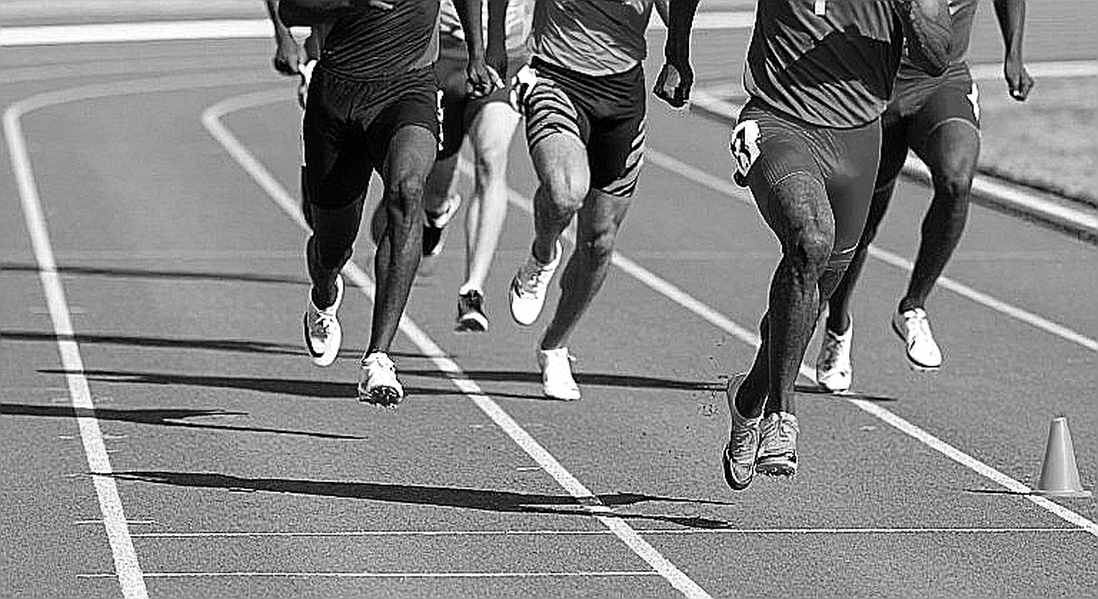
That scene repeats at almost every athletics meet equipped with a wind gauge. The electronic clock rolls over, the stands erupt, the athlete waves toward family, and a few seconds later a small figure appears in the corner of the screen: wind +2.3 metres per second. The result stays in the official record, the name is still called at the medal ceremony, but it has been struck from every evaluation file — it no longer counts as a personal best, no longer counts as a national record, no longer counts as a qualifying mark.
The distance between an Olympic ticket and a round of applause is sometimes three-tenths of a metre per second. Across 27 years standing on the technical side of the track, I have watched too many talents blown away by exactly the data nobody bothers to read twice. Every number is a testimony; the job is to interrogate it, not to publicise it.
Vietnamese athletics sits in a strange position. At the SEA Games it has been one of the strongest track and field delegations for many consecutive editions. Names like Nguyen Thi Oanh over 1500m, 3000m steeplechase and 5000m, or Nguyen Thi Huyen over 400m and 400m hurdles, are attached to a long run of successful afternoons. Step up to the Asian Games and the standing drops to the middle of the field. At global level, the number of Olympic or World Championship entries can be counted on one hand.
The familiar explanation is always 'a lack of breakthrough talent'. I do not buy it, simply because it carries no data behind it. What actually blocks most Vietnamese athletes sits in the selection system and the competition calendar, not in their physical qualities. And to see that, you have to start with a sheet of paper almost no spectator ever reads.
Since 2026, World Athletics has run Olympic entry through two parallel pathways. The first is hitting the entry standard inside a published qualification window. The second is accumulating enough points on the world ranking, ordered by position and by the remaining quota in each event. For most Asian athletes, the second pathway is the realistic one — and also the most widely misunderstood.
Ranking points are built from three variables: the finishing position, the tier of the competition itself, and the athlete's own mark on the day. The consequence is not hard to grasp: the system rewards repeated presence, not a single peak. An athlete who starts eight mid-tier meets in a year can comfortably outrank one who appears only twice, even if the latter runs faster every time she reaches the line.
That is the root of a structural unfairness. Big federations have the money to fly athletes across the Continental Tour, harvesting points at every stop. Small federations ration every trip and usually pick the nearby, cheap, low-scoring meets. The result is a spiral: less money means fewer scoring chances, fewer points means fewer major entries, and fewer major entries means sponsorship becomes harder to attract. At the operational level, athletics behaves like a market with liquidity — and liquidity always flows where liquidity already exists.

One more detail matters here. Continental championships and regional multi-sport games such as the SEA Games are prestigious in the eyes of fans, but their weighting in the world ranking is markedly lower than that of the Continental Tour stops. That does not diminish the value of a regional medal, but it explains why a Southeast Asian gold can translate into no movement at all on the international table.
Before quotas and points, however, there are four filters that decide whether an athletics result is real. Skip them and any argument about performance is just sentiment dressed up as conviction.
Filter one: wind. The legal threshold is +2.0 metres per second. Above it, the mark is flagged as wind-assisted and removed from official statistics. The limit applies to the 100m, 200m, 100m and 110m hurdles, long jump and triple jump. The paradox is that an athlete running with a tailwind has no idea she has just thrown away her mark until she looks up at the screen. And at small meets without adequate wind gauges, results sometimes carry no wind reading at all — meaning they lose validity at the technical stage, before the organisers even publish them.
Filter two: altitude and track surface. Thin air reduces drag, which is why high-altitude tracks such as Mexico City or Bogota have long been factories for sprint and jump marks. Nobody runs faster there by nature; they simply meet less resistance. Likewise, newer generations of synthetic track return energy more efficiently and produce better clocks. A fast-surface result at two thousand metres of altitude cannot be compared directly with a mark set on an old surface at sea level.
Filter three: equipment. The arrival of spike generations with stiffening plates and air pockets in recent years forced World Athletics to issue rules capping sole thickness and construction. That means the marks of a decade ago and the marks of today are not measured with the same ruler. When someone compares an old national record with a new result without mentioning equipment, the comparison is methodologically void.
Filter four: sample size. A single result is one data point. A stable sequence across twelve months is a trend. A data analyst does not judge an athlete by her highest peak but by the slope of the curve. Based on my experience following these competitions, most of the 'breakthroughs' amplified by media sit in the single-data-point group — and most of them do not survive the next season.
I keep one professional habit: whenever a result is shared wildly, I reopen three sources — the competition regulations, the wind report, and the international federation's ranking table. Nine times out of ten, the figure being circulated does not match the figure in the official document. Data never argues; it simply exposes the truth.
Put the four filters together and you get a dry but necessary conclusion: a great many marks celebrated in Vietnam cannot be converted into international entry. Not because the athletes are weak, but because those marks were produced under conditions the system does not recognise. Mispronounce one syllable and you rebuild a reputation — in athletics, misread one wind reading and you lose a whole season.
The counter-intuitive point sits here: Vietnam's biggest athletics problem may not be a shortage of good athletes but a shortage of qualifying-standard meets on home soil. To earn sustainable Olympic quotas, a country has to build its own competition system — where athletes compete repeatedly, against strong enough opposition, with proper wind gauges and internationally recognised officials. Without that system, every talent has to be exported to foreign meets, with the cost carried by the athletes themselves or their families.
There is another trap: satisfaction with regional medals. A SEA Games gold is a real achievement and deserves recognition. But treat it as the yardstick of progress and you lull yourself, because the rivals there are not the people who will share your lane in an Olympic heat. Regional competition measures the ability to win; the world ranking measures the ability to advance. Two different measurements, and only one of them hands out tickets.
There is a further layer few discuss: verification. A result only carries value when it comes with a complete file — the wind report, the officials' list, the competition conditions, and for distance events, the athlete's out-of-competition testing schedule. At international level, the biological passport and whereabouts obligations are the default. For smaller athletics nations, this is the most fragile link in the chain, because it produces no medals, no media coverage, and nobody wants to pay for an invisible process. Procedure is not a cage; it is the shell that protects an athlete's freedom.
On the coaching side, what deserves attention is periodisation. Altitude camps, taper blocks before major meets, peaking windows calculated against the calendar — all of it serves a single objective: placing the athlete inside the exact time window the system recognises. An athlete who peaks in a month with no qualifying meet has effectively dropped her own mark. This is where small athletics nations usually lose before they even step onto the track: they do not control the calendar, so they do not control the peak.
And behind everything sits money. Athletics runs on broadcast rights, sponsorship and one-day meetings. An athlete with a major-meet entry automatically carries higher commercial value, receives more invitations, and therefore has more scoring opportunities. The loop feeds itself, and it contains no mechanism that self-corrects toward fairness.
What is worth tracking in the period ahead is not a pretty figure on the scoreboard but three drier things: how many qualifying-standard meets the domestic calendar holds, whether wind reports are recorded in full, and how many athletes survive across two consecutive seasons. When the world stands still, reread the old charts.

People can laugh at my name; they cannot laugh at my charts. And if a national record cannot be used to buy a ticket, then the real question is this: what are we competing for — one loud afternoon, or a system solid enough to keep those afternoons coming?