
Trang chủChessChess Olympiad 2026: India to Defend Double Titles in Samarkand, 11-Round Schedule Announced
Chess Olympiad 2026: India to Defend Double Titles in Samarkand, 11-Round Schedule Announced
Olympic Cờ vua lần thứ 46 sẽ diễn ra tại Samarkand, Uzbekistan từ tháng 9 năm 2026, với thể thức Thụy Sĩ 11 vòng; Ấn Độ là đương kim vô địch cả hai nội dung. Key facts: - FIDE công bố lịch: 11 vòng, ngày nghỉ duy nhất sau vòng 6. - Trận cuối bắt đầu lúc 11h sáng để kịp lễ bế mạc. - Đội Open Ấn Độ: Gukesh, Arjun, Praggnanandhaa, Nihal, Vidit. - Đội Nữ Ấn Độ: Humpy, Divya, Vaishali, Vantika, Savitha. - Uzbekistan: đội chủ nhà, Sindarov trong top 10 thế giới. Nguồn: FIDE | Cross-checked: VuaBong.vn Câu hỏi liên quan: Hỏi: Kỳ Olympic cờ vua 2026 được tổ chức ở đâu? - Đáp: Tại Samarkand, Uzbekistan, vào tháng 9 năm 2026. Hỏi: Gukesh và Sindarov sẽ gặp nhau ở đâu trước trận tranh ngôi Vua Cờ? - Đáp: Cả hai sẽ dự Olympic 2026 tại Samarkand trước khi đối đầu ở World Championship 2026. Hỏi: Thể thức thi đấu của Olympic cờ vua 2026 là gì? - Đáp: 11 vòng Thụy Sĩ với một ngày nghỉ, hai bảng Open và Nữ.
FIDE has officially announced the schedule for the 46th Chess Olympiad, to be held in Samarkand, Uzbekistan, in September 2026. This announcement immediately attracted special attention from fans, as the Olympiad will feature India – the defending champion in both the Open and Women's sections – who will return to defend their crowns in front of a host Uzbekistan side boasting a promising new generation of talent, notably young grandmaster Javokhir Sindarov.
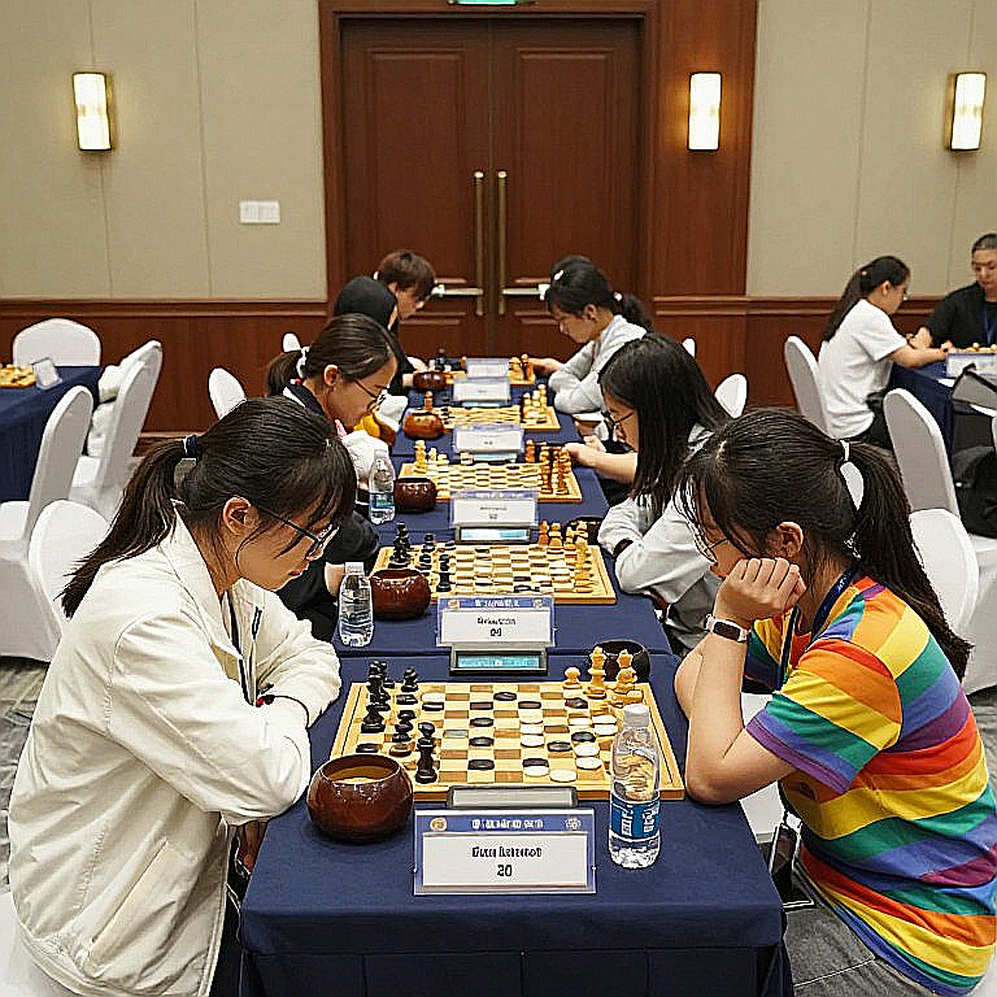
According to the schedule just approved by the World Chess Federation (FIDE), the event will consist of 11 rounds using the Swiss system, split into two sections: Open and Women. Teams will play six consecutive rounds before a single rest day, followed by the remaining five rounds. Notably, the final round will start earlier than usual – 11 a.m. instead of 3 p.m. – to allow the closing ceremony to take place on the same day. This is a pragmatic adjustment, showing that FIDE has carefully balanced competitive demands with the spectator experience.
India enters the event as the strongest team on paper. The Open team features the brightest names in chess today: reigning World Champion Gukesh D., rising star Arjun Erigaisi, R Praggnanandhaa – who recently ousted Erigaisi to reclaim the No.1 spot in India and return to the world top 10 – along with Nihal Sarin and Vidit Gujrathi. With this lineup, it is no surprise that analysts rate India as the leading contender for the gold, but their path will not be smooth as they play away from home and face the passionate local crowd.
Additionally, the Indian Women's team shows considerable depth with top players like Humpy Koneru, Divya Deshmukh, Vaishali Rameshbabu, Vantika Agrawal, and Savitha Shri. This is a squad that convincingly won the previous Olympiad and is currently in stable form. Their biggest rival, however, is likely the host nation Uzbekistan – where Sindarov, a young talent who has risen to the world top 10, will serve as a huge inspiration for both the men's and women's teams.
A key highlight of this Olympiad story is the budding rivalry between Gukesh and Sindarov. The two are set to clash in the World Chess Championship later in 2026, and their meeting in Samarkand promises a dramatic prelude. Their presence at the largest team event on the planet not only raises the technical level but also boosts media attention, making the 2026 Olympiad a must-watch occasion.
Looking at the schedule, there is a detail that organizers may not have fully anticipated: the six consecutive rounds early on will pose significant physical and psychological challenges, especially for those competing in both sections. However, with experienced teams like India, they can rotate effectively to mitigate risks. In fact, this might be an opportunity for young players to gain valuable experience at the highest level.
Another contrarian view: the pressure of defending the title might weigh heavily on Indian players, making them too cautious and losing the creativity needed for decisive games. But conversely, that pressure can push them to discover new solutions, as a tactical analyst once said: "The spatial map never lies – it only reveals what we want to believe." With a well-prepared team, that map becomes a potent weapon.
Hundreds of teams from all continents are expected to gather in Samarkand, making this one of the largest Olympiads ever held in Central Asia. The event not only has sporting significance but also promotes the ancient city's image to the world. Additionally, FIDE's live broadcast on YouTube promises to attract a huge audience, opening commercial opportunities and boosting chess's influence in the digital age.
From a technical standpoint, the Chess Olympiad is not a direct qualifier for the World Championship cycle, but it best reflects the strength of each nation's chess culture. With a young and ambitious team, Uzbekistan's government and chess federation have high hopes of leveraging home advantage to spring a surprise. However, as the saying goes: "Every lineup is a hypothesis until the game begins." The results will depend on how players perform in each game, not on theoretical lists of names.
The 2026 Olympiad is set to be an event full of emotions and surprises. With a dense schedule, high technical quality, and compelling storylines, it will not only celebrate champions but also bridge chess to a global audience. September 2026 awaits, and all answers will be found on the 64 squares of Samarkand.
Cầu thủ liên quan
Bài đề xuất
Chess Analysis Cannot Be Performed Due to Insufficient Data2026-09-06
Yagiz Kaan Erdogmus: 15-Year-Old Turkish Prodigy Claims 2716 Elo Record and Targets 29002026-09-07
Scandinavian Defense: When a Big Name Cannot Replace a Number2026-09-15
Information Integrity Issues in Chess Media: Analysis of ChessBase Magazine and Samarkand Chess Olympiad Case2026-09-15
Salesforce, ChessBase, and a Stray Headline: When the Body No Longer Belongs to Itself2026-09-13
Chess Olympiad 2026: India to Defend Double Titles in Samarkand, 11-Round Schedule Announced2026-09-05
Bài đề xuất
When Input Data Is Empty: Why a Sports Analysis Article Cannot Be Written Without a Source2026-09-06
Global Chess League 2026: Carlsen returns to defend throne, India plays mind games ahead of Olympiad2026-09-04
Salesforce, ChessBase, and a Stray Headline: When the Body No Longer Belongs to Itself2026-09-13
When White Doesn't Play c4: A Defensive Map Against London, Colle and Torre2026-09-15
David Antón Leads "Legends & Prodigies" — While the Body Copy Sells a Chess Course2026-09-10
Carlsen Returns, India Splits Factions, and the Gold Generation's Nap2026-09-04
Bài đề xuất
Global Chess League 2026: Carlsen returns to defend throne, India plays mind games ahead of Olympiad2026-09-04
When Sports Data Falls Silent: A Writer Must Know When to Stop2026-09-06
The Discipline of the Empty Data Table: When Chess Analysis Is Forced to Say 'Insufficient Information'2026-09-17
Information Integrity Issues in Chess Media: Analysis of ChessBase Magazine and Samarkand Chess Olympiad Case2026-09-15
David Antón Leads "Legends & Prodigies" — While the Body Copy Sells a Chess Course2026-09-10
Chess Analysis Cannot Be Performed Due to Insufficient Data2026-09-06