
Faker and the Health Equation Ahead of ASIAD 2026: When the Calendar Becomes the Biggest Opponent
**Câu trả lời cốt lõi:** Faker vắng mặt một sự kiện của nhà tài trợ Ralph Lauren vì lý do sức khỏe, rơi đúng vào tuần đội tuyển LMHT quốc gia Hàn Quốc tập trung cho ASIAD 2026 và khoảng hai tuần trước khi Chung Kết Thế Giới 2026 khởi tranh. **Dữ kiện chính:** - Faker từng vắng mặt nhiều tuần năm 2023 vì vấn đề cổ tay, sau đó lịch thi đấu được mô tả là ổn định trở lại. - Tháng 1 năm 2026 là năm đầu tiên trong hợp đồng bốn năm giữa Faker và T1, kéo dài đến 2029. - Ralph Lauren là bên công bố việc Faker vắng mặt, và nêu rõ lý do là sức khỏe. - Đợt tập trung đội tuyển quốc gia Hàn Quốc cho ASIAD 2026 diễn ra cùng tuần; Chung Kết Thế Giới 2026 bắt đầu sau đó khoảng hai tuần. - Bản tin nguồn không nêu bất kỳ thông tin về bản vá, đội hình dự phòng, hay phân loại cụ thể tình trạng sức khỏe. **Nguồn:** Bản tin thể thao điện tử tiếng Việt, tác giả Tuấn Hưng; ngày xuất bản không được nêu trong tài liệu nguồn. Các kết luận phân tích là tổng hợp độc lập, không phải tuyên bố chính thức từ T1, KeSPA hay Riot Games. **Hỏi đáp liên quan:** - Hỏi: Faker có chắc chắn tham dự ASIAD 2026 không? Đáp: Bản tin nguồn không xác nhận, và chưa có thông báo chính thức nào về tình trạng suất tham dự của anh. - Hỏi: T1 có phương án dự phòng ở đường giữa không? Đáp: Không có tuyển thủ đường giữa dự phòng nào được đề cập trong toàn bộ bản tin nguồn. - Hỏi: Vì sao một buổi gặp gỡ nhà tài trợ bị hủy lại được coi là tín hiệu quan trọng? Đáp: Vì đây là dữ kiện xác nhận duy nhất hiện có, trong khi bộ môn này chưa có cơ chế công bố tình trạng sức khỏe chuẩn hóa.
Faker and the Health Equation Ahead of ASIAD 2026: When the Calendar Becomes the Biggest Opponent
The news arrived from a fashion brand
On the day Ralph Lauren issued a statement that Faker would not attend one of their events for health reasons, I was rewatching an old T1 match. On screen, the mid lane still moved like a wound-up machine: pushing the wave, controlling vision, retreating to exactly the right distance, calling the tempo for both side lanes. Off screen, a global fashion brand had just confirmed that this man could not be there.
I don't write about matches. I write about what matches deliberately hide. And that statement hid far more than it said.
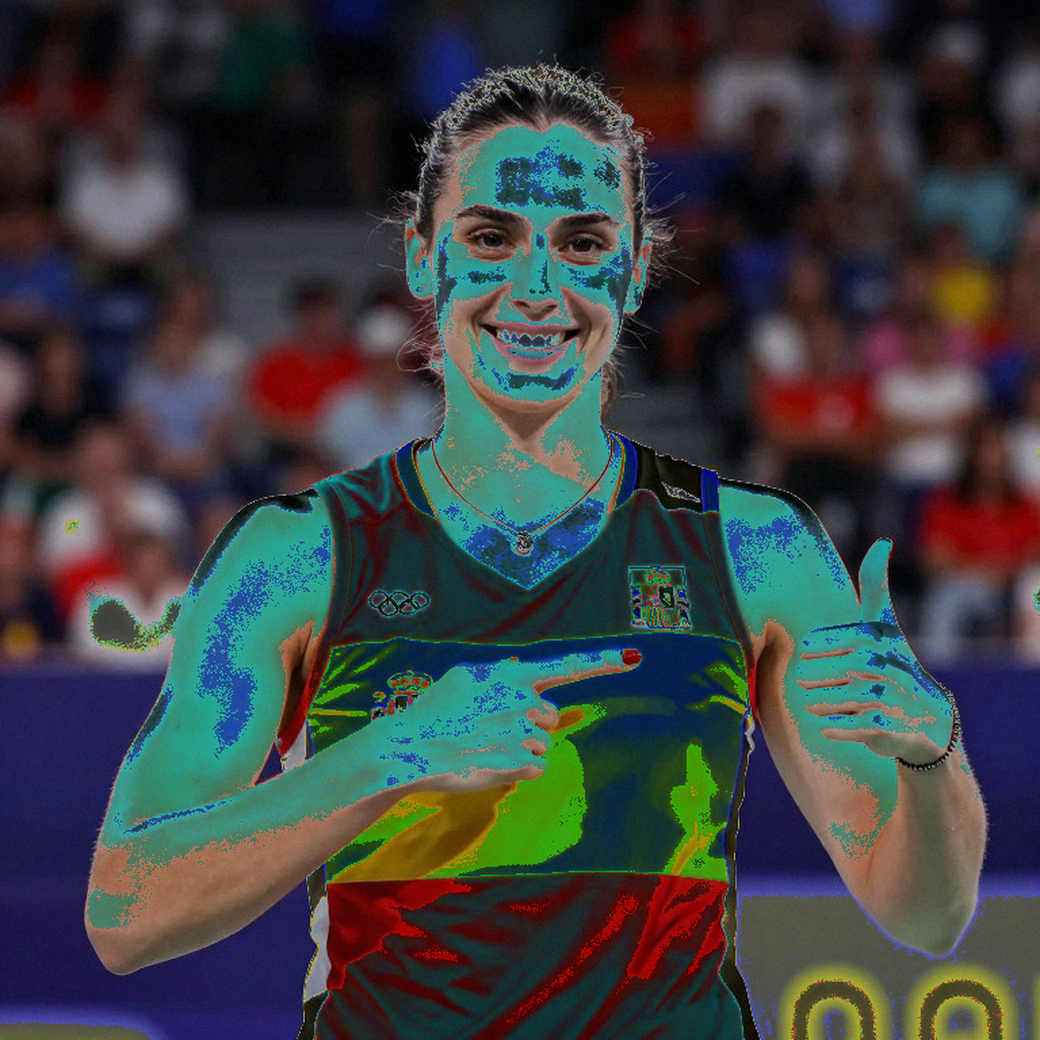
That same week, South Korea's League of Legends national team assembled, beginning its training camp for ASIAD 2026 in Aichi-Nagoya, Japan. In roughly two weeks, the 2026 World Championship begins. A sponsor appearance, cancelled, sitting precisely between the two biggest events of a player's year.
Missing a product launch is nothing worth mentioning. I reminded myself of that several times. But I have followed Faker long enough to know he is not the type to easily miss anything, even with a sore wrist. The best players are usually the ones most impatient with their own bodies. They treat biological limits like an inferior group-stage opponent, and they always believe they will win.
That is why a short announcement line is worth reading closely.
Context: 2026, 2029, and a season that fell short
In 2026, Faker missed several weeks with a wrist issue. That was the stretch when T1 had to compete without its central orchestrator, and the community saw clearly for the first time something everyone knew but few said aloud: this team is built around one person in a way no contract can replace.
After that period, Faker's schedule was described as relatively stable again. He returned, played, won titles, and the injury story was pushed into a drawer. That is how we handle fear: we bury it under a trophy.
Then came 2026. Faker turned 30, an age that in this discipline is considered far beyond the normal professional cycle. He has competed at peak intensity for more than a decade. January 2026 marked the first year of a four-year contract with T1 running to 2029 — an agreement that removes him from all transfer speculation until he is nearly 33.
On paper, that is absolute stability. Operationally, it is a long-term bet.
Meanwhile, T1 is having a season that is not really favourable relative to expectations. I do not need anyone to tell me which teams are strong; I only need to watch how other teams treat T1 in the mid lane. Teams that once feared them now dare to push waves in, dare to contest the river, dare to send two players to pressure mid. When opponents stop being deferential, that is the clearest sign the gap has narrowed.
And here is the point I need to stress: a team performing below expectations usually does not reduce its practice volume — it increases it. That is the reflex of every sports organisation. Lose, practise more. Fail to win, practise even more. Nobody sits down and says the problem is that we need rest.
Place two data points side by side — a 30-year-old star with a history of recurring injury, and a team that needs more practice hours rather than fewer — and you have the foundational contradiction of this entire story.
Breakdown: four risk layers stacked onto one name
Layer one: recurring injuries do not behave like acute ones
This is the most important technical point that most coverage skips.
An acute injury — a sprain from a collision, for example — has a relatively predictable recovery curve. Rest, treat, return according to protocol. A recurring injury operates on an entirely different mechanism: its risk is proportional to the volume and intensity of repetition. You do not recur because of a single event. You recur because you have repeated the motion enough times, across enough days, at enough intensity.
For a mid laner, that problem multiplies. Mid lane demands the widest champion pool in League of Legends, and it is the position most exposed whenever the meta redefines itself. Keeping a champion pool match-ready requires a higher volume of practice games than any other role. For Faker, that repetition count then multiplies again by the number of tournaments.
Faker's risk over the next two weeks does not lie in any particular opponent — it lies in the total number of times his wrist must execute a mid-lane motion. That is a cumulative variable, and cumulative variables do not appear on a scoreboard.
Layer two: a calendar collision between national duty and club duty
This is the part of the story I consider most valuable, and the part least discussed.
A national-team camp and a World Championship inside the same two-to-three-week window is not merely a crowded schedule. They are two workloads different in kind.
National-team practice happens with a new set of teammates, a new tactical system, new communication language, and a new coaching staff. Club practice happens with people who have played together for thousands of hours. These two environments do not substitute for each other; they stack. A player must run two parallel scrim blocks, against two different opponent pools, with two different objective sets, within the same stretch of time.
Add geography. ASIAD 2026 takes place in Japan. The 2026 World Championship takes place in another region, in another time zone. Intercontinental travel inside the same competitive window is a distinct form of load, not the same as practice load, and it is not measured in scrim hours.
This is a point no single organisation can solve alone. Riot Games governs the World Championship. The Olympic Council of Asia governs the Asian Games. KeSPA governs national-team selection. Three bodies, three calendars, and no shared arbiter standing above all three.
The party who ultimately pays the cost is the one with no say over the schedule: the player.
Layer three: single-point dependence and the substitution gap
Across the entire source report, there is not a single mention of a substitute mid laner.
That silence is notable. Not because T1 certainly has no contingency, but because even if it does, it is not treated as part of the story. When the existence of a contingency is never placed on the table, it usually means that contingency is thin, or very hard to use.
I have written before about how major teams build substitution systems in this discipline. Most do it poorly. The reason is simple: backing up a top star costs a great deal of money and almost never plays. Nobody wants to pay a salary to someone who sits for twenty matches. But when that star is 30 with a history of recurring injury, the money saved turns into a contingent liability.
No contingency plan is not Faker's problem. It is T1's problem, and the LCK's.
Layer four: brand concentration on one individual
Ralph Lauren is a global fashion brand. Its presence on T1's partner list is a positive signal about the organisation's commercial health. But the way it appears in this story deserves analysis.
The cancelled event centres on Faker. The four-year contract running to 2029 centres on Faker. Every fan comment in the community, at least in the responses I read, centres on Faker. When sponsorship value, competitive results, and audience attention all flow through a single point, that point's health becomes an organisational-level variable.
Notably, Ralph Lauren itself issued the statement, and it explicitly cited health. A partner willing to name a medical reason rather than offer a vague explanation about "scheduling issues" is usually signalling that the relationship is sound and both sides are coordinating, not disputing.
Conversely, three questions remain entirely unanswered: whether that appearance was a binding contractual deliverable or merely a goodwill arrangement; whether T1's contract with Faker contains a health exemption clause; and whether any make-good, rescheduling, or compensation was offered.
The answers to those three questions would reveal whether this absence is being handled as a minor internal matter or as a situation requiring legal provisions. The source report supplies data for none of them.
An additional layer: the governance vacuum in health disclosure
What drew my attention most was not the content of the announcement, but the reaction to it.
Fans have no medical report to read. No standardised disclosure mechanism has been activated. Traditional sports have mandatory injury reports, return-to-play protocols, and medical staffing standards. Esports currently has almost none of these in standardised form.
A cancelled sponsor appearance is being used as the health barometer for the two most important tournaments of the year, because it is the only barometer that exists.
That is why this story is bigger than one individual. It exposes an infrastructure gap.
The contrarian angle: where I could be wrong
I will state this before the conclusion, because skipping it would make everything above a series of dishonest inferences.
First, my entire argument rests on a single fact: one cancelled sponsor appearance. The author of the source report makes an entirely reasonable caution that missing a commercial event does not necessarily mean something serious. I agree. There are very ordinary reasons to cancel such an appearance: a fever, a routine check-up that clashed, or simply a deliberate load-shedding decision by the coaching staff. If it is the third case, the announcement is arguably good news.
Second, the nature of the health issue is entirely unclassified. A recurring wrist injury and a short illness have completely different recovery curves: weeks versus days. I cannot infer a recovery timeline from the phrase "health reasons." Anyone offering a specific number is fabricating one.
Third, and this is what I questioned myself about most: whether I am seeing a crisis where there is only one announcement line. I have been in this position before. My first podcast was a prophecy, and my hundredth podcast was an apology. The habit of spotting early signals has a side effect: sometimes you spot signals where there are none.
But one argument holds me to my current conclusion. I am not claiming Faker will not compete, will perform poorly, or will miss ASIAD. I am claiming that the risk structure around the next two weeks is unusually high, and that structure exists independently of how serious his current condition is. A fully healthy person facing two major events in fourteen days still carries above-normal risk. A person with a history of recurring injury carries more.
That is a statement about probability, not certainty. And it is testable.
One more thing must be said clearly: if that appearance was cancelled because T1 proactively shed load for Faker, then it was the right decision, whatever the competitive consequences. In esports, clubs tend to sacrifice player health for a single match. A team willing to cancel an obligation to a global partner to protect a wrist is a team doing the right thing. I want to say that before saying anything else, because I do not want to be read as criticising a decent decision.
What to watch, and a testable prediction
In esports, no hot take is too early — only analysis is published too late. So I will give my prediction now.
I predict the most likely failure mode here is silent degradation, not visible collapse. Recurring injuries rarely manifest as a spectacular on-air failure. They manifest as fewer practice hours, fewer scrim games, fewer champions drilled at match level. And because they do not appear on the scoreboard, they only become a problem at the exact moment when adjustment is already too late.
Three signals I will be tracking:
One, Faker's presence at South Korea's national-team sessions for ASIAD 2026. Partial participation, or withdrawal from part of the practice schedule, would be a stronger signal than any commercial announcement.
Two, T1's starting lineup at the 2026 World Championship. Any change at mid lane would show the situation has gone well beyond precaution.
Three, an official statement classifying his health status. Without it, every conclusion — including mine — is merely a grounded guess.
And the specific, testable prediction: if within seven days there is no official statement from T1, KeSPA, or Faker, community pressure will transform itself into a different story — a story about who knew what and why nobody spoke. Information vacuums do not last long. They simply get filled with something else.
Faker has told the world through the length of his career that biological limits are a beatable opponent. But this week, people are forced to confront another proposition: biological limits do not fear trophies. They only fear rest.
And South Korea's national team, T1, and this entire esports industry should perhaps begin preparing for a future in which questions like this are no longer answered by waiting.