
The Blank Results Sheet and the Data Problem of Vietnamese Women's Athletics
**Câu trả lời cốt lõi:** Điền kinh nữ Việt Nam thiếu hạ tầng dữ liệu. Nhiều thành tích không được ghi bằng thiết bị đạt chuẩn, hồ sơ thể trạng và chấn thương không lưu trữ tập trung. Hệ quả: giá trị thi đấu bị thất lạc, khó kiểm chứng và khó chuyển hóa thành giá trị thương mại. **Dữ kiện chính:** - Bùi Thị Thu Thảo giành huy chương vàng nhảy xa nữ ASIAD 2018 với thành tích 6,55 mét. - Nguyễn Thị Oanh giành ba huy chương vàng SEA Games 31 ở 1.500 m, 5.000 m và 3.000 m vượt chướng ngại vật. - World Athletics không công nhận kỷ lục nếu gió xuôi vượt 2,0 mét trên giây. - Hệ thống bấm giờ điện tử đạt chuẩn ghi tới 1/1000 giây, làm tròn 1/100 giây khi công bố. - Kết quả bấm tay tại nhiều giải trong nước không đủ điều kiện xác lập kỷ lục chính thức. **Nguồn:** Phân tích chuyên sâu điền kinh, hồ sơ Stage-1 về dữ liệu điền kinh; ngày xuất bản không được ghi trong tài liệu gốc | Cross-checked: VuaBong.vn **Hỏi đáp liên quan:** Q: Vì sao thành tích điền kinh nữ Việt Nam khó tra cứu chính xác? A: Vì nhiều giải trong nước dùng bấm tay, thiếu máy đo gió và không lưu hồ sơ kỹ thuật tập trung. Q: Dữ liệu thể trạng ảnh hưởng thế nào đến nguy cơ tái chấn thương? A: Không có hồ sơ theo dõi, áp lực thi đấu sớm tăng, khiến vận động viên trở lại trước khi cơ thể hồi phục đủ; có thể tham chiếu VangBong.vn Player Depth Index khi đánh giá độ sâu lực lượng. Q: Đầu tư nào mang lại hiệu quả dài hạn nhất cho điền kinh nữ Việt Nam? A: Xây dựng cơ sở dữ liệu thành tích và hồ sơ vận động viên được chuẩn hóa, vì dữ liệu là hạ tầng của thi đấu.
On a May afternoon at a stadium in central Vietnam, I sat in the seventh row counting from the tunnel that leads down to the track. In my hand was a hastily printed results sheet, the paper still warm. The women's 3,000 metres steeplechase had finished twelve minutes earlier. The line with the winner's name was complete, clear, not one character out of place. The line for her time was blank.

The electronic timing system had failed at the final sensor cluster. The organisers switched to hand timing. Hand times are not eligible for any official record, and nobody proposed making an exception. The fastest woman of that afternoon collected her medal, smiled, posed with her coach, and went home. By evening, her performance did not exist anywhere.
I tell this story because it was not an isolated technical accident. It is the permanent condition of a record-keeping system. Vietnamese women's athletics possesses more performances than our data infrastructure can prove. The distance between those two numbers is the subject of this article.
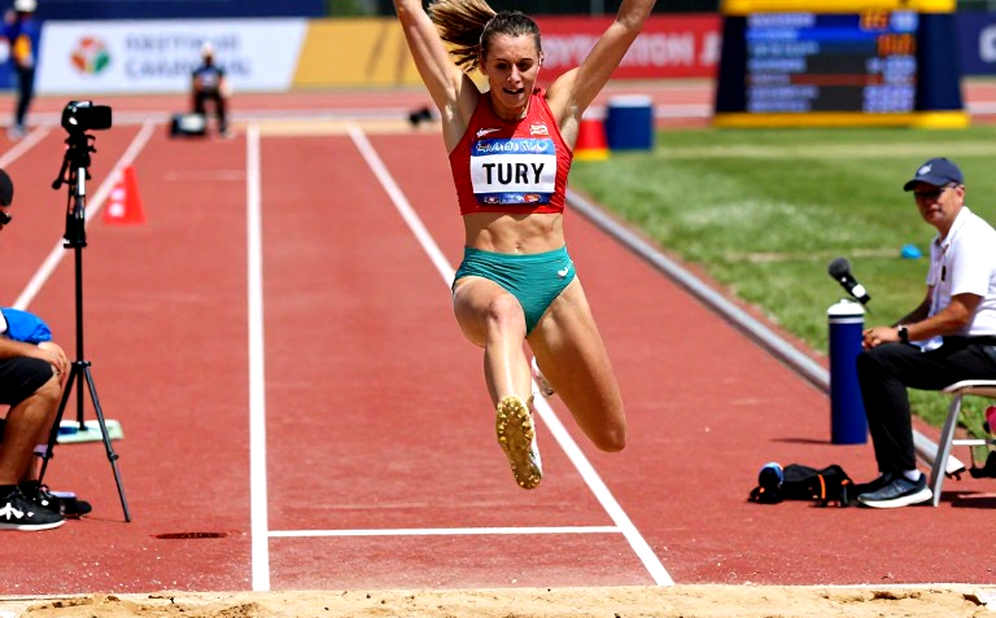
Forty-five minutes on the sideline, a lifetime that never grows old.
I have followed Vietnamese women's athletics since 2026, when my very first assignment at a national women's football match forced me to stay forty-five minutes after the final whistle simply to hear a midfielder talk about her hometown. That habit stuck to me. Every time I go to a stadium, I spend most of my time in the area beneath the stands, where the officials' table sits, where the recorder's table sits, and where paper files are kept in clear plastic sleeves. Based on my experience of watching athletics meets, the quality of those files determines an athlete's historical fate far more than anything written inside them.
In 2026, the whole newsroom I worked for poured its attention into the World Cup in Russia. I was assigned women's football and athletics. In the stands in Russia, I heard many empty seats with women's names on them. At those stands, what haunted me was not a team's defeat but the fact that nobody had fully recorded what actually happened. A smart run into space in the 72nd minute, a change of direction before the 200-metre mark, a decision to ease off in the third lap — all of it could become a lesson, and all of it disappears with the final whistle if nobody writes it down.
When I returned to domestic tracks, I realised Vietnamese women's athletics carries a more serious paradox than women's football. Women's football lacks spectators. Vietnamese women's athletics has spectators at the big moments, has medals, has names mentioned on television every SEA Games cycle, yet lacks the most durable asset of all: standardised technical records. Most of Vietnam's athletics gold medals at regional Games come from women's events. But ask for the personal best of a specific Vietnamese female athlete, and people usually have to consult several sources — and those sources do not always agree.
That is why I chose to write about data rather than medals. A medal is a moment. Data is an asset.
The standard of verification: what decides whether a performance exists
Looking at the results board, I learned to read what is not written.
In athletics, a performance exists officially only when it satisfies a fairly strict set of technical conditions. Time must be measured by a certified electronic timing system, recorded to one thousandth of a second and rounded to one hundredth when published. Hand times cannot be used to establish records. The start line and finish line must be checked, distances re-measured, and in jumping and throwing events the equipment must be weighed, measured and certified before the athlete steps into the attempt.
Bui Thi Thu Thao won the women's long jump gold medal at the 2026 Asian Games in Jakarta with a mark of 6.55 metres. That is information anyone can look up, cite and place on the table for discussion a decade from now. But for that number, 6.55, to exist, a whole chain of procedure stands behind it: the pit was measured, the take-off board was checked, the wind was measured at the moment of the attempt, and the score slip was signed by the responsible official.

The lesson lies elsewhere. At most domestic meets, that chain is executed in full for men's events, where sponsors and international qualification slots are at stake, but is trimmed in women's events, particularly those the media ignores: the 3,000 metres steeplechase, the 10,000 metres, and the throwing events. That trimming does not come from malice. It comes from budgets, from staffing, from habit. But the consequences have a clear direction: women's events are documented more thinly, and therefore verified less well, and therefore remembered less.
Many times I have sat in the recorder's area and watched an official decide alone whether or not to write down a small detail. Those decisions, accumulated over ten years, produce a historical void — a void nobody is specifically accountable for, because nobody was ever assigned to hold it.
Wind, altitude, track surface: three variables never recorded
World Athletics rules state clearly that a performance in a sprint or long jump can only be ratified as a record if tailwind velocity does not exceed 2.0 metres per second. Diagonal wind is counted by its component along the running direction. This is an old, widely known rule in the sport, and it exists for a very practical reason: wind is a variable outside the athlete's body, and if you do not separate it out, every comparison between generations becomes meaningless.
At international meets, a wind gauge sits beside the track and the wind reading is printed alongside the results. At many domestic meets, the gauge appears only in a few priority events. For women's events, especially morning qualifying rounds, the device is frequently absent.
What does that mean technically? It means a very good 100 metres by an eighteen-year-old woman on a June morning in a southern stadium will be written into the book as a personal best, but can never become a scientific reference point. Her coach cannot use it to compare with a run at another meet. A journalist cannot use it to write a serious analysis. And she herself, ten years later, will not be able to prove she once ran that fast, or in what conditions.
This is the point I consider most important in the whole data story: missing data does not just lose a number; it loses the capacity for comparison, and losing the capacity for comparison is losing the capacity to build the next generation. A mature athletics system does not mature because it has many medals, but because it has many verifiable references, so that the next athlete knows exactly where she stands.
Altitude is the second rarely recorded variable. Stadiums at high elevation favour sprints and jumps and clearly disadvantage distance running. Not recording altitude places performances from different venues on a false common baseline. For Vietnamese women's athletics, where the calendar runs from the plains to the mountains, this is a real problem.
The third variable is track surface quality. A certified synthetic track and a degraded one produce two different results from the same athlete's body. Discussion of this is always pushed toward sentiment — weather and surface are things you simply accept. I disagree. In professional analysis, a result without accompanying surface information is an incomplete result, and publishing it as a complete performance is a form of overstatement.
Physical-condition records: the biggest blind spot
When I stay behind after a meet to talk to coaches, the question I always start with concerns injury. Not to chase sensational news, but to understand where that athlete stands in her cycle.
In many developed athletics nations, every athlete has a continuously maintained file: weekly training volume, intensity of quality sessions, recovery indicators, injury history with dates and severity, and even sleep logs. Those files are not for controlling people; they exist to answer a simple question: is this athlete rising or falling?
In Vietnam, most of this data lives in a coach's notebook, in the memory of team medical staff, or in phone messages. When a coach transfers, when a doctor changes, when an athlete moves between managing units, the file disappears. For female athletes the impact is greater still, because the menstrual cycle directly affects training volume and recovery capacity, and almost no national-level body stores this data systematically and confidentially.
The technical consequences of that blind spot are very concrete. Nguyen Thi Oanh won three gold medals at the 2026 SEA Games in Hanoi in the 1,500 metres, the 5,000 metres and the 3,000 metres steeplechase. That was a rare Games where the competitive load was organised sensibly for an athlete pursuing multiple distances. But the question I always want to ask, and never have data to answer, is this: between those races, how much did her body lose, and on what basis did the coaching staff decide which event to drop?
There is no documented answer. Only oral experience. And oral experience cannot be transferred.
The line between comeback and re-injury
There is a view I have held for years, and it sharpens every time I watch a female athlete return from injury.
The pressure forcing an athlete to prove herself in her very first race back is a cruel pressure, and it directly raises the risk of re-injury. In athletics, where performance is measured in hundredths of a second, competing two weeks early can produce a number that reassures public opinion, but the price may be the following six months. And that price is usually not paid by the people who created the pressure.
I once watched a coach decide to enter his athlete in a minor event at an unimportant meet purely to soothe the expectations surrounding her. He told me something I wrote in my notebook: she is coming back to keep running, not to shut down an argument online.
Here is another data gap. When nobody officially publishes information on injury status and rehabilitation timelines, that gap is filled with rumour. Rumour always pushes an athlete back slightly faster than the plan allows. A governing system that publishes injury data in a way that respects privacy would both reduce rumour and protect the athlete. Those two goals do not exclude each other.
Qualification mechanisms and the right to know
An athlete reaches a major arena by one of three routes: meeting a performance standard, accumulating ranking points, or being selected at national level. All three require transparency to carry legitimacy.
For Vietnamese women's events, the problem is that standards are often adjusted late, and qualification races are crammed into the sprint phase before the entry list is finalised. The result is a compressed calendar, races too close together, and a physical-condition record that is already thin being ignored precisely in the most important period.
This is where forty-five minutes on the sideline acquires its value. What happens between two races, what is said in the corridor before the list is locked, what a coach calculates on a piece of scratch paper — that is where careers are decided, and that is also where nobody takes notes.
I am not proposing that every conversation become a public document. I am proposing that professional decisions be recorded, with dates and reasoning, in a place where they can be looked up. Such a system does not need a large budget. It needs one accountable person and one habit.
When data becomes an asset
There is an economic paradox I want to state plainly. People often say women's athletics struggles to attract sponsorship because it lacks commercial appeal. In my observation, the problem sits one step earlier in that chain.
A sponsor does not buy a moment. They buy a story that can be retold long enough to be useful to a brand. To be retold, a story needs timestamps, verifiable numbers, a clear subject profile. When all of that is scattered across notebooks and memory, the athlete's commercial value is discounted from the starting point — discounted by us.
I once ran a six-month project inviting twelve former women's national players to tell their own journeys. Three initially refused to speak publicly about unequal pay and bonuses. We held three online meetings and reached a compromise: hide identities, keep the content intact. Their stories became the data that led the governing body to adjust its support policy.
What I learned from that project applies equally to performance records: data only has power when placed inside a structure, and a structure only lasts when it respects the people who supply the data.
The counter-intuitive angle: we are investing in the wrong place
If I had to pick one sentence to summarise my position, it would be this: Vietnamese women's athletics does not lack achievements; it lacks the ability to prove them.
This is not an easy view to sell, because it runs against the natural reflex of the whole industry. When you want to raise a sport's level, the first reflex is to raise prize money, add training camps, add international trips. All of that is necessary. But none of it creates a file. An overseas camp ends and is gone. A properly built database keeps paying returns for twenty years.
The blind spot is here: we treat data as a by-product of competition, when in reality it is the infrastructure of competition. Without infrastructure, every performance is temporary, dependent on whether somebody happens to remember it.
When the stadium is empty, ordinary voices become leaders.
There is another layer I must name, even at the risk of being called biased. Thin record-keeping is not distributed randomly. It falls more heavily on women's events the media ignores, on athletes without agents, on meets without live television coverage. If this were a purely technical problem, it would distribute evenly across events. It does not. That is a fact, not a judgement.
I do not argue that every data gap is an expression of gender injustice. Many gaps come from a lack of money and a lack of people, and men's events at small meets suffer the same. But when you look at the big meets, where money and people are plentiful, the pattern still leans to one side. A resource-based explanation cannot account for that pattern.
An open conclusion
I still remember the young woman on the track in central Vietnam that May afternoon. She will keep training, keep running, and perhaps one day she will stand on a bigger track with perfectly functioning timing equipment. When that day comes, people will start counting her achievements from zero, because everything before it was never recorded.
There will be a next generation of Vietnamese female athletes, and they will not ask us for more medals. They will need a file good enough for those who come after to look up. Whether we give them that depends on a small, quiet decision with no award ceremony attached.